

9 Interior Design Ideas for Flexible PU Stone Panels
PU stone panels are more than just an imitation stone decorative material. In modern interior design, they function as a versatile wall system capable of creating architectural depth, spatial layering, and natural ambiance. Compared with natural stone, PU stone panels are lighter, easier to install, and more suitable for large-scale applications in both residential and commercial interiors.
However, achieving a truly high-end result depends not only on the product itself, but also on how it is applied within the design. Below are some of the most common and effective interior application ideas for PU artificial stone panels, covering spatial structure, visual layering, material combinations, lighting integration, and more.
Ⅰ. The Most Popular Application: Feature Walls
Creating decorative feature walls is currently the most common use of PU foam stone panels. They are widely used for TV walls, sofa background walls, entryway walls, dining area feature walls, headboard walls, and more.
Design Tips:
1. Avoid covering every wall completely
If stone textures are applied across the entire space without focus, the room may feel heavy or overwhelming. It is better to highlight selected feature walls, central focal areas, or symmetrical statement walls to create a stronger visual impact.
2. Enhance texture with lighting
One of the biggest advantages of PU stone is its three-dimensional texture. It is highly recommended to combine it with wall-washing lights, concealed LED strips, or spotlights. Side lighting can significantly enhance the depth and shadow details of the stone surface, especially at night.

Ⅱ. Recessed Wall Design for a Premium Look
This is a very common design approach in luxury residences and hotel projects. The core idea is to make the PU faux stone appear integrated into the architecture rather than simply attached to the wall surface.
During construction, extra wall depth is reserved so the PU stone area sits slightly recessed. The edges are concealed with hidden finishing details, creating a cleaner and more seamless appearance.
The biggest advantage of this method is that the finished wall feels like part of the building structure itself, rather than an added decorative panel.
Suitable Applications:
Entryway feature walls
Fireplace walls
Art display walls
Hotel lobbies
Clubhouse interiors

Ⅲ. A Popular Modern Combination: PU Stone & Wood Veneer
The combination of PU stone and wood veneer is one of the most popular choices in modern luxury interiors. PU stone panel introduces a natural and rugged texture, while wood adds warmth and softness, creating a balanced material contrast.
Recommended Design Approaches:
1. PU Stone as the main wall, wood as framing or side panels
This creates a visually balanced composition.
2. Layered wall design
For example, PU stone on the lower half and wood veneer on the upper half helps increase spatial depth.
- PU Stone combined with wood slat panels
This approach is especially popular in commercial interiors such as reception areas, showrooms, cafés, and branded retail stores.

Ⅳ. A High-End Design Technique: Shadow Gap Details
To create a refined and sophisticated interior, avoid directly connecting different materials with hard transitions. Instead, incorporate shadow gaps, black trims, or metal edge strips between materials.
Why does this look more premium?
Because it softens abrupt transitions, hides installation imperfections, and improves the overall precision of the space. Since PU stone panel naturally has complex textures, shadow gap transitions work particularly well.

Ⅴ. Corner Wrapping Techniques
Many people overlook the importance of corners, but corners are essential for creating a realistic architectural effect.
Recommended Methods:
1. 45-degree mitered corners
This allows the PU stone texture to continue naturally around edges. Ideal for columns, fireplaces, and wall corners.
2. Full-panel corner wrapping
Some projects use L-shaped corner pieces or continuous wrapping structures to achieve a more authentic natural stone appearance.

Ⅵ. Fireplace & Decorative Wall Applications
PU stone panels are highly suitable for fireplace walls, rustic American interiors, European-style textured walls, boutique hotel feature walls, and similar decorative styles.
Because the material is lightweight, it does not add excessive structural load like natural stone.
During design, it is recommended to avoid overly perfect symmetry. Preserving natural height variations, texture irregularities, and uneven gaps can create a more authentic stone effect.

Ⅶ. Commercial Space Applications
In commercial interiors, PU stone is often used to strengthen atmosphere and reinforce brand identity. In spaces such as cafés, hotels, restaurants, SPA centers, showrooms, and fashion stores, PU stone serves not only as decoration but also as a tool for creating immersive spatial experiences.
Common Design Ideas:
1. Highlight key focal areas
Examples include reception backdrops, logo walls, and storefront entrances.
2. Combine with warm lighting
Under warm lighting, PU stone surfaces appear far richer and more layered than ordinary painted walls.

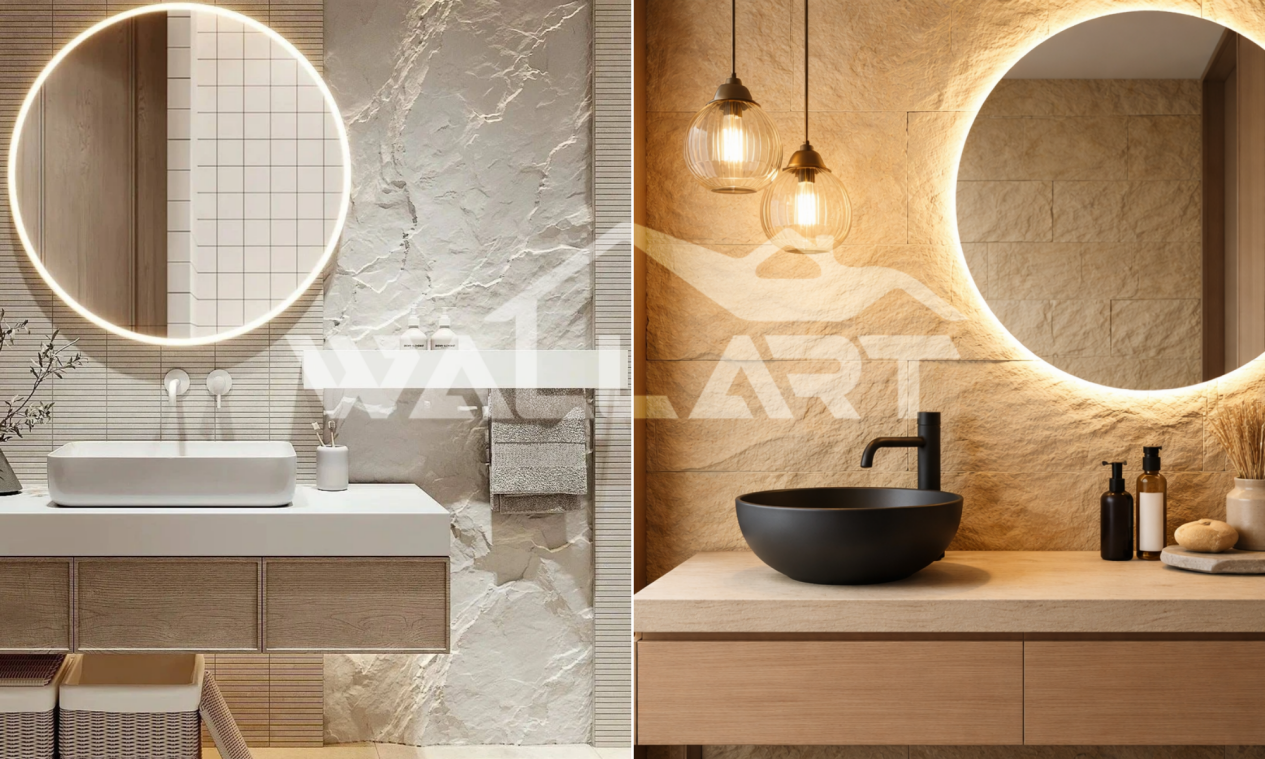
Ⅷ. PU Stone Applications in Small Spaces
Many people worry that stone textures may feel overwhelming in compact interiors. In reality, small spaces can also benefit from PU stone panels when used correctly.
Recommended Approaches:
1. Choose light-colored stone textures
Colors such as beige, light gray, and cream tones can reduce visual heaviness.
2. Control the installation area
Avoid using stone across the entire room. Feature walls or partial decorative zones work much better.
3. Combine with concealed lighting
Soft indirect lighting helps create a more comfortable and spacious atmosphere.
Ⅸ. Combining PU Stone with Modern Minimalist Design
Many people assume stone materials only suit traditional interiors. In reality, modern minimalist spaces increasingly incorporate PU stone panel as well.
The key is choosing simpler textures rather than highly detailed traditional PU stone patterns.
Recommended Styles:
Large-scale textures
Low-contrast colors
Cement-inspired finishes
Layered rock textures
These styles pair much better with modern minimalist interiors than dense traditional cultural stone textures.

What Defines Truly High-End PU Stone Design?
Premium PU faux stone design is not about covering every wall with PU stone panels.
The real essence lies in using PU stone as part of the architectural language of the space — creating visual hierarchy, focal points, light and shadow interaction, material contrast, and structural depth.
When PU stone panel becomes part of the spatial design itself rather than just a surface decoration, the final result feels far more natural, sophisticated, and architectural.